

Pictured: Sam Dov at Faded Barbershop on March 31, 2026. Photo credit: Brittany Wren, Stingray Writing
In a quiet townhouse on Lincoln’s south side, Sam Dov watches his two-year-old son play. To a passerby, it looks like a simple moment of domestic peace. But for Sam — a barber, youth advocate, parent ambassador, and father — every hour spent at home is part of a complex, high-stakes calculation.
Sam’s path to this townhouse was forged through what he calls “moving different.” Just a few years ago, the narrative surrounding Sam was vastly different. As he recently shared with his Instagram community, “I was the felon no one wanted to hire, the felon that couldn’t get an apartment.”
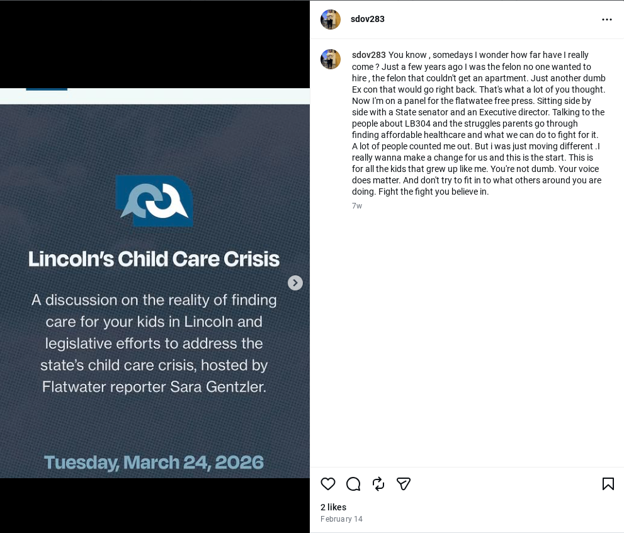
Pictured: Sam Dov posted about participating in the Child Care Crisis panel on February 14, 2026. Source: Instagram
But Sam refused to let his incarceration define him. He worked his way out of homelessness, surviving 15-hour days in barber school while living in a hotel with his wife and child. Today, he is a manager at Faded Barbershop and a leading voice for Lincoln’s families. Recently, he stood as an essential voice on a panel hosted by the Lincoln Community Foundation and Flatwater Free Press, sitting side-by-side with a policy researcher and executive director to discuss the future of childcare.
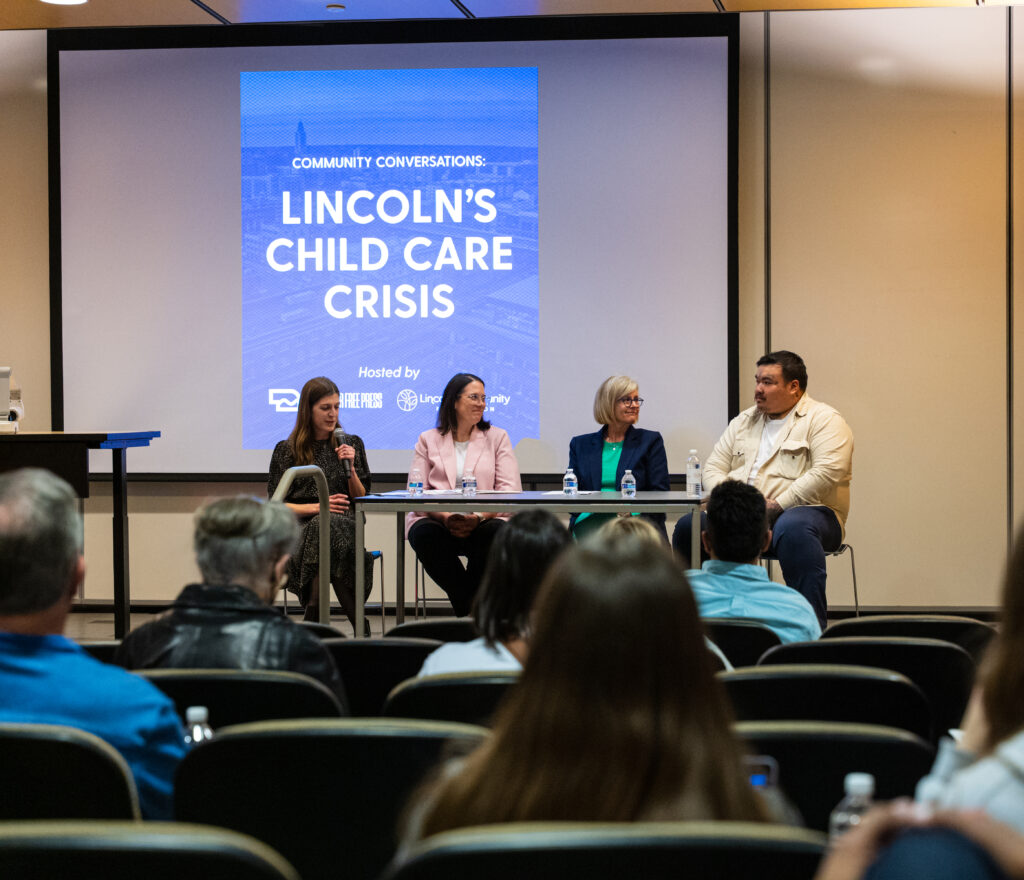
Pictured: Nebraska Early Childhood Collaborative Parent Ambassador Sam Dov spoke on a panel with Lincoln Littles Executive Director Anne Brandt, Early Futures Partnership Director of Policy Research Katie Bass, and Flatwater Free Press Nebraska Reporter Sara Gentzler at Andersen Hall on March 24, 2026. Photo credit: Carlos Ferrer, Speakeasy Visuals
“I really wanna make a change for us, and this is the start,” Sam said. “This is for all the kids that grew up like me. You’re not dumb. Your voice does matter.”
The Impossible Math of Childcare
For Sam and his partner, the struggle isn’t a lack of drive; it’s the impossible math of childcare for two kids. Before they became a combined household, his spouse qualified for Title 20 childcare subsidies. Now, because Sam is a successful barber, they earn “too much” to qualify for state aid under old standards, yet the cost of quality care — which can exceed $17,000 a year per child in Lincoln — would nearly swallow his partner’s entire potential income.
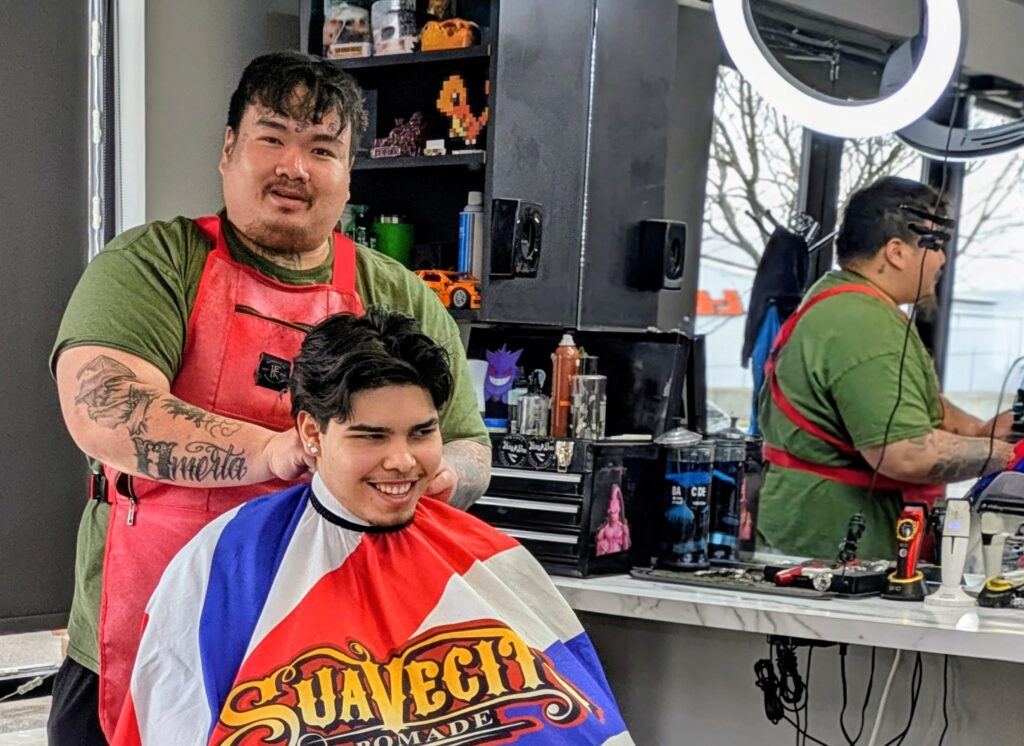
Pictured: Sam Dov giving a haircut at Faded Barbershop on March 31, 2026. Photo credit: Brittany Wren, Stingray Writing
“The public generally doesn’t know what’s going on; they just know they can’t afford it,” Sam said during the panel. On paper, a family might seem stable, but the reality is a trap: “We make too much to get childcare assistance, but we don’t make enough to pay for it either.”
This reality forces families into agonizing choices. If Sam’s partner works, she essentially works for free to pay for care. If she stays home, Sam must work around the clock to bridge the gap. “Dads are barely home. Moms are overworked and stressed out,” Sam noted. “No one’s happy, and the child has to deal with it.”
A Community Response: “Children are Counting on Us”
This human struggle is why early childhood education is a cornerstone of the Prosper Lincoln agenda. Tracy Edgerton, President of the Lincoln Community Foundation, emphasized that this is a collective challenge that requires “widespread buy-in.”
“Early childhood education is a real challenge for our families,” Edgerton said. “We want to make sure Lincoln is a community where everyone has the opportunity to thrive. We can work together to leverage relationships and figure out how all of us can make that happen.”
To address this, the Foundation supports Lincoln Littles, which acts as a “chamber for childcare.” Anne Brandt, Executive Director of Lincoln Littles, believes public investment on the local, state, and federal levels is necessary to ensure access to affordable early care and education for all, regardless of zip code.
“Nearly 90% of brain development happens by the time a child is five,” Brandt explained. “We need to recognize early childhood as a public good in the same way that we recognize our public K-12 school system.”
Bridging the Gap: Policy and Grassroots Advocacy
While local philanthropy has provided millions in tuition assistance, experts like Dr. Katie Bass of First Five Nebraska looked toward Legislative Bill 304 (LB 304) to create a permanent bridge. The bill (passed by the Nebraska legislature on April 10) will keep childcare subsidy eligibility at 185% of the Federal Poverty Level. Without it, eligibility was set to “sunset” or plummet in 2026, potentially leaving thousands of Nebraska parents — and the businesses that rely on them — in the lurch.
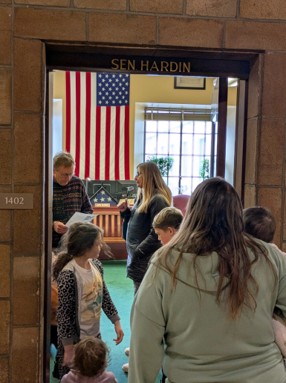
Pictured: Shannon Hampson’s children and childcare kids helped advocate for LB304 at the Nebraska State Capitol Building with Lincoln Littles Associate Director Suzanne Schneider on December 4, 2025. Photo credit: Brittany Wren, Stingray Writing
As the panel highlighted, this isn’t just a social issue; it’s an economic one. Nebraska simply cannot afford to lose more workers to a lack of infrastructure.
Even though the bill has passed, legislative change can still feel distant to a parent staring at a monthly bill they can’t pay. That is where Sam steps in. As a Parent Ambassador with Nebraska Early Childhood Collaborative, Sam uses his barber chair as a hub for “guerrilla advocacy,” translating complex policy into real-world action.
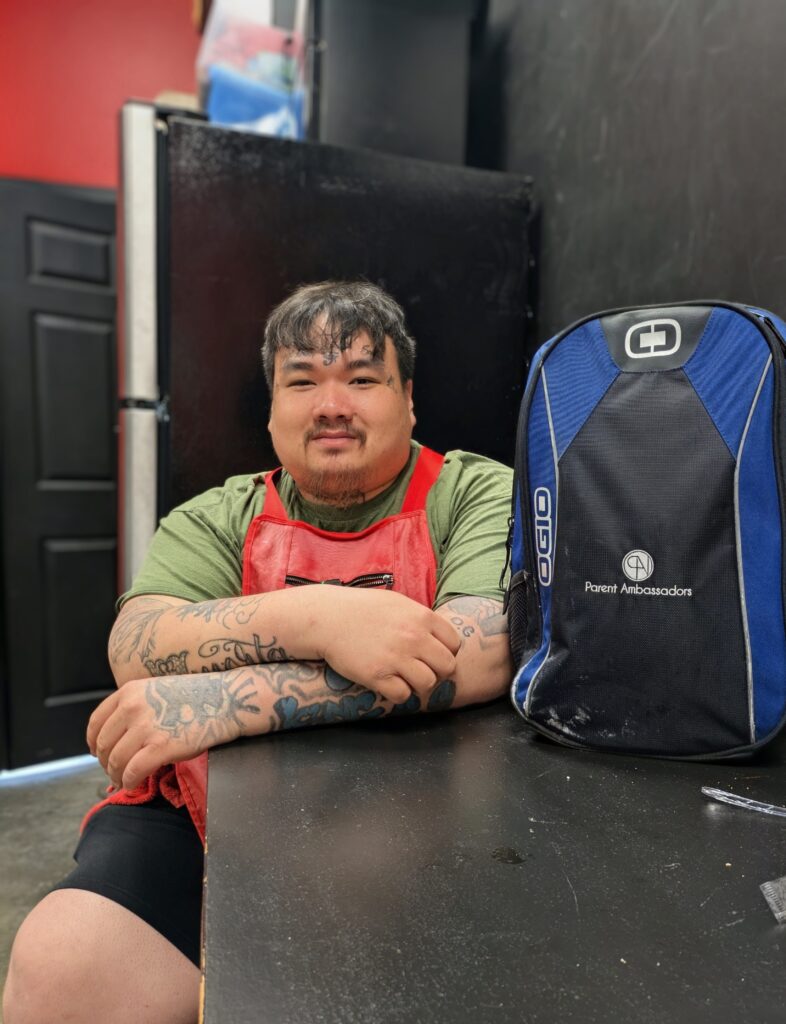
Pictured: Sam Dov at Faded Barbershop on March 31, 2026. Photo credit: Brittany Wren, Stingray Writing
He recalls a recent moment at the shop when a customer mentioned the struggle of finding care. Sam didn’t just offer sympathy; he pulled up the unicameral’s website right then and there. He walked the customer through the form to contact their local senator, helping them find their voice in the halls of the Unicameral. It’s a quiet, powerful example of a neighbor taking matters into his own hands, ensuring that those most impacted by the crisis are the ones leading the conversation.
“This is what I’m about,” Sam says. “Don’t try to fit in to what others around you are doing. Fight the fight you believe in.”
By supporting LB 304 and initiatives like Lincoln Littles, the community is working to ensure that families like Sam’s don’t just survive while waiting for policy to catch up — they prosper.